
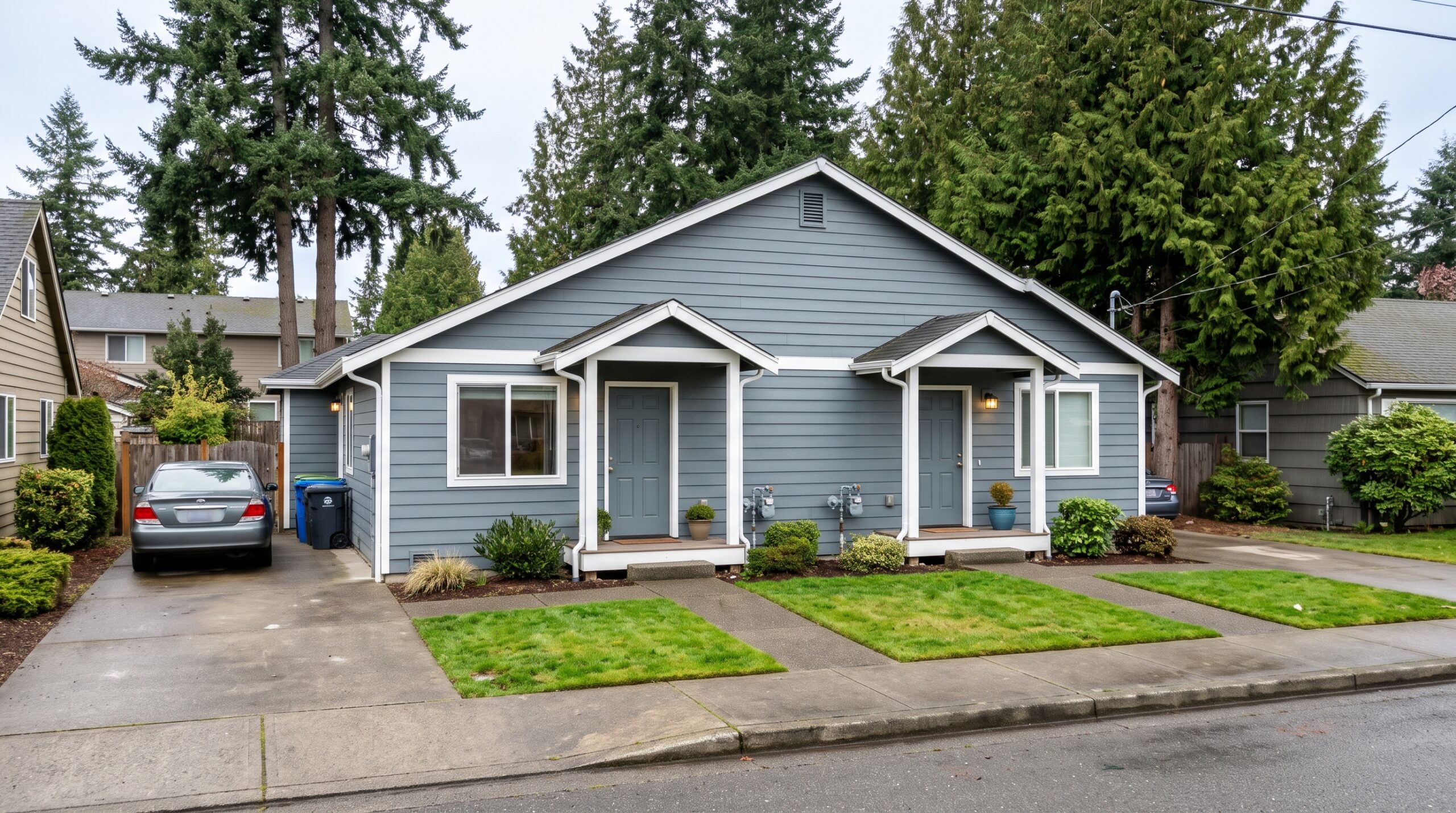
Small multi-family investing is one of the most practical ways to start building long-term wealth through real estate. A duplex, triplex or fourplex can give you rental income, a hedge against rising rents, and in some cases a place to live while your tenants help pay the mortgage. Over the years, I have helped clients buy their first small rental properties, and the ones who succeed tend to have one thing in common: they went in with clear eyes and good information.
Everett and Lynnwood are two of the markets I recommend first-time investors look at closely. Here is why, and what you should know before you buy.
Why small multi-family?
Properties with two to four units sit in a sweet spot. They are small enough to qualify for residential financing in many cases, yet large enough to spread risk across more than one tenant.
- More than one income stream: if one unit is vacant, the others still bring in rent.
- Residential-style financing: two-to-four-unit properties can often be financed with conventional or government-backed residential loans rather than commercial loans.
- House hacking: living in one unit and renting the others can make homeownership more affordable and may open up owner-occupied loan options.
- Hands-on learning: a small building is a manageable way to learn property management before scaling up.
Why Everett and Lynnwood?
Everett
Everett is the largest city in Snohomish County and a major employment center, anchored by aerospace, healthcare, the Navy and a growing list of other employers. That steady employment base supports rental demand. Everett also has a good supply of older duplexes and small apartment buildings, particularly in established neighborhoods near downtown, north Everett and around the Everett Community College and Providence hospital areas.
Lynnwood
Lynnwood has changed quickly, especially with Link light rail now connecting the city to Seattle. Neighborhoods with easy transit access tend to attract renters who commute to Seattle, Bellevue and the University District. Small multi-family properties here can appeal to a broad tenant pool, from young professionals to families.
Both cities offer lower entry points than most of King County, which can make the numbers work more easily for a first investment.
Financing options to explore
Every investor’s situation is different, so I always recommend talking with a lender who works with investment properties. Common paths include:
- Owner-occupied conventional or FHA loans: if you plan to live in one unit, you may qualify for a lower down payment than a pure investment property would require.
- Conventional investment loans: typically require a larger down payment and stronger reserves when you will not live on site.
- Portfolio or DSCR loans: some lenders qualify the loan based on the property’s rental income.
Ask your lender how they count projected rental income, how much reserves they require, and whether there are any differences for two-unit versus four-unit properties.
What to inspect in an older multi-family building
This is where my construction background matters most. Many duplexes and fourplexes in Everett and Lynnwood were built decades ago, and some have had a series of owners with different ideas about maintenance. Before you buy, look carefully at:
- The roof and gutters: one roof covering multiple units is a major expense.
- Electrical: older panels, undersized service or outdated wiring can be costly and may affect insurance.
- Plumbing and side sewers: a sewer scope is a must on older properties.
- Separate meters: find out which utilities are separately metered and which the owner pays.
- Moisture: crawlspaces, basements and bathrooms with poor ventilation are common trouble spots in our climate.
- Unit condition: see every unit if at all possible, not just the vacant one.
- Permits and legal unit count: confirm the number of units is legal with the city. Converted or unpermitted units can create problems.
Running the numbers, simply
Before making an offer, build a simple budget:
- Rent: use realistic market rents for each unit, not the seller’s best-case projection.
- Vacancy: plan for some time between tenants.
- Operating expenses: property taxes, insurance, utilities the owner pays, maintenance, landscaping and garbage.
- Property management: even if you plan to self-manage, budget for it in case you change your mind.
- Capital expenses: set aside money for big-ticket items like roofs, water heaters and flooring.
- Financing: your mortgage payment, including principal and interest.
If the property only works when everything goes perfectly, it is not a good deal. Look for a property that still makes sense with conservative assumptions.
Being a landlord in Washington
Washington has detailed landlord-tenant laws, and some cities add their own rules. Before you buy, take time to understand:
- Notice requirements for rent increases and lease terminations.
- Security deposit rules and required move-in documentation.
- Fair housing requirements in advertising and tenant screening.
- Any local rental registration or inspection programs.
The Washington State Residential Landlord-Tenant Act is the starting point. Many investors also consult a real estate attorney or hire a professional property manager, especially for their first property.
Is small multi-family right for you?
Small multi-family investing can be rewarding, but it is not passive, especially at first. You will deal with tenants, repairs and paperwork. For investors who are willing to learn and plan carefully, a well-chosen duplex or fourplex in Everett or Lynnwood can be a strong foundation for long-term wealth.
Let’s talk about your first investment
If you are considering your first small multi-family property, I would be glad to help you evaluate neighborhoods, walk through buildings with a construction-minded eye and run realistic numbers before you make an offer.
Call or text (206) 510-5909, email aliveiseh@windermere.com, or visit aliveiseh.com.
Ali Veiseh, Windermere Real Estate / East, Yarrow Bay
Leave a Reply