
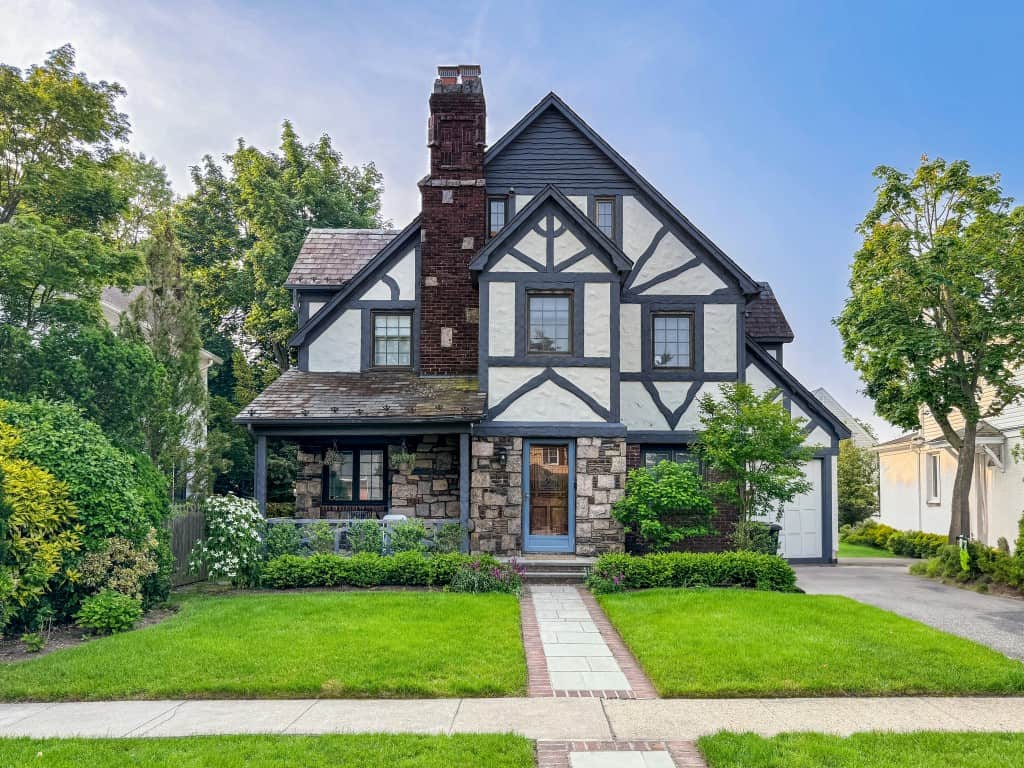
Tudor-style homes have a devoted following for good reason. Their storybook charm, rich architectural details, and sense of permanence are difficult to find in newer construction.
Increasing the resale value of a Tudor-style house takes more than a fresh coat of paint. The strongest improvements balance preservation with modernization, protecting the details that make the home special while improving the comfort and functionality today’s buyers expect.
What Is a Tudor-Style House?
Tudor-style homes became popular in early 20th century America and drew inspiration from medieval English architecture. These homes are known for feeling solid, warm, and full of character.
To maximize resale value, homeowners should highlight those strengths while thoughtfully addressing the features that may feel dated or create concerns for modern buyers.
Tudor homes are often recognized by:
- Steep rooflines and prominent gables
- Decorative half-timbering
- Tall, narrow windows, often with leaded glass or diamond panes
- Large chimneys with decorative brickwork
- Arched doorways and entryways
- Rich interior details such as exposed beams, hardwood floors, and ornate millwork
Preserve and Restore the Architectural Details
For Tudor homes, the architectural details are often the main selling point. Exposed beams, arched doorways, leaded windows, decorative woodwork, fireplaces, and original masonry can immediately separate the home from newer construction.
Before making major renovations, take inventory of the home’s original elements. If certain features have been covered, damaged, or altered over time, restoring them may create more long-term value than replacing them with contemporary alternatives.
Buyers attracted to Tudor homes are often buying the character as much as the property itself. Preserve the details that cannot easily be recreated.
Fix What Buyers Cannot See Before Worrying About What They Can
Cosmetic improvements are exciting, but underlying structural or mechanical problems should usually come first. A beautiful kitchen will not carry the same value if an inspection later reveals problems with the roof, electrical system, chimney, drainage, or HVAC.
Priority items may include:
- Roof repairs or replacement
- Chimney flashing and masonry repairs
- Stucco repair
- Drainage improvements
- Electrical system upgrades
- Heating and cooling improvements
- Plumbing repairs
Once the home’s fundamentals are in good condition, cosmetic upgrades can have a much stronger impact on buyer confidence and perceived value.
Brighten the Interior Without Stripping Away the Character
One of the most common challenges with Tudor homes is that the interiors can feel dark. Deep wood tones, smaller windows, and compartmentalized layouts were common characteristics of the era.
The solution is not necessarily to remove those details. Instead, look for ways to introduce light and openness while respecting the original architecture.
Practical ways to brighten a Tudor home include:
- Paint walls in warm whites or soft off-whites
- Replace heavy drapes with lighter window treatments
- Upgrade lighting while choosing fixtures that complement the home’s style
- Refinish dark hardwood flooring where appropriate
- Improve kitchen sightlines through widened doorways or pass-through openings
- Use mirrors strategically to reflect natural light
Modernize the Kitchen and Bathrooms With Tudor-Appropriate Finishes
Kitchens and bathrooms strongly influence how buyers evaluate a home. In a Tudor property, however, modern upgrades should still feel consistent with the overall architectural style.
Extremely minimalist finishes can sometimes feel disconnected from exposed beams, arched doorways, fireplaces, and traditional millwork.
Consider finishes such as:
- Warm-toned hardware in brass or bronze
- Shaker or inset cabinetry
- Natural stone or honed countertops
- Subway tile, zellige, or handmade tile
- Statement lighting inspired by traditional design
- Warm wood accents that complement existing architecture
Make the kitchen and bathrooms feel updated without making them look like they belong in a completely different house.
Make a Strong First Impression Before Buyers Step Inside
For Tudor-style homes, the exterior is a major part of the appeal. The roofline, masonry, front door, chimney, landscaping, and decorative timbering can influence how buyers feel about the property before they even enter.
A home that looks well maintained, intentional, and true to its architectural style can create a stronger first impression and help support a premium presentation.
Boost Curb Appeal While Honoring the Home’s Original Scale and Materials
Exterior improvements should enhance the home’s character instead of disguising it. Buyers who specifically seek Tudor properties are often drawn to the craftsmanship and details that distinguish the style.
Curb appeal improvements that work well for Tudor homes include:
- Cleaning or repointing original brick and stonework
- Refreshing stucco in a historically appropriate color
- Restoring or replacing the front door with a period-inspired design
- Using low hedges, boxwoods, climbing plants, or mature landscaping
- Adding lantern-style or wrought iron exterior lighting
- Repainting or restaining decorative half-timbering
- Keeping gutters, roofing, pathways, and exterior trim well maintained
Add Functional Living Space to Increase Buyer Appeal
Architectural character attracts attention, but buyers also think practically. Additional usable living space can increase the appeal of a Tudor home, especially when that space supports modern lifestyle needs.
Options may include:
- Finished basements: Create a family room, playroom, gym, guest area, or entertainment space.
- Mudrooms: Add practical storage while complementing the home’s traditional layout.
- Home offices: Convert an underused room into a dedicated workspace.
- Outdoor living: Consider stone patios, pergolas, garden seating areas, or other improvements that complement the home’s exterior materials.
Increase the Resale Value of a Tudor-Style House by Balancing Historic Charm With Modern Comfort
The Tudor homes that tend to make the strongest impression are not necessarily the ones that have been completely remodeled. They are the homes where the owner understood what made the property special and made thoughtful improvements around those qualities.
Preserving architectural character while improving lighting, functionality, maintenance, kitchens, bathrooms, and outdoor presentation can help a Tudor home feel both timeless and ready for today’s buyer.
If you are considering selling a distinctive home in the Seattle or Eastside market, understanding which improvements buyers will value most can help you make smarter decisions before listing.
Leave a Reply